Textiles, sourcing, and standards
What GOTS Certification Can—and Cannot—Tell You About Organic Cotton Bedding
A certification label can make a complicated supply chain easier to read. It cannot make that supply chain simple. GOTS offers meaningful information about organic fibers and textile processing, but it is not a complete account of a blanket’s environmental footprint, nor a guarantee that every part of its story is ideal.
A blanket seems to invite a narrow set of questions. Is it soft? Is it warm? Will it shrink in the wash? But the moment a bedding label says “organic,” the object acquires a longer biography: cotton grown somewhere, fiber processed somewhere else, yarn spun and cloth woven, dyed, finished, sewn, shipped. The finished textile rests in a bedroom; its making may have crossed several borders and passed through many hands.
GOTS—the Global Organic Textile Standard—is intended to make parts of that history more legible. It is a standard for organic textiles that addresses both the fiber content and aspects of processing. For someone comparing organic cotton bedding, certification can offer a useful basis for asking better questions. It can help distinguish a verified claim from a phrase that merely sounds reassuring.
But the label is not an all-purpose verdict on a product. It does not, by itself, tell you the precise climate impact of a blanket, whether it will last for decades, or whether every stage of its journey has a smaller footprint than every alternative. A standard is a boundary around certain claims, not a magic window through which the whole supply chain becomes visible.
What GOTS is designed to cover
GOTS is a voluntary standard for textiles made with organic natural fibers. It is concerned not only with the agricultural status of the fiber, but also with relevant stages of textile processing and manufacturing. That distinction matters. A piece of cotton can be grown to organic agricultural standards and still move through processing stages that raise separate questions about chemicals, wastewater, working conditions, and traceability.
Certification is meant to follow the textile through defined parts of the production chain. Facilities involved in processing and manufacturing must meet applicable requirements and be inspected by approved certification bodies. Documentation and transaction records help connect certified inputs to goods moving between businesses. In this way, GOTS is more than a test of the cotton at the farm gate: it sets requirements for a wider chain of custody and production.
The standard addresses areas including the use of organic fibers, chemical inputs, environmental management, and social criteria. The precise requirements depend on the applicable version of the standard and the role of a facility in the supply chain. This is one reason a responsible explanation should avoid treating the label as a single, simple promise. It represents compliance with a defined set of criteria, assessed through a certification system—not a guarantee that every imaginable concern has been measured.
GOTS also has labeling rules that distinguish between different organic-fiber content claims. Its familiar “organic” label grade generally requires at least 95 percent certified organic fibers; the “made with organic” grade generally requires at least 70 percent. The remaining fiber content, where allowed, is subject to the standard’s rules. Because standards and implementation documents can change, readers who need a definitive answer should consult the current GOTS standard and labeling guidance, rather than relying on a retailer’s shorthand.
That percentage is not a measure of quality or comfort. It tells you something about the fiber composition under the standard’s labeling system. It does not tell you whether a particular weave will feel crisp or plush, whether the blanket will breathe well in a warm room, or how the fabric will respond to years of laundering. Those are questions of material, construction, use, and care.
The difference between organic fiber and organic textile
“Organic cotton” can refer narrowly to agricultural production: how the cotton was grown and certified under an applicable organic farming system. A finished textile involves more than the crop. Fibers are cleaned, spun, woven or knitted, and often dyed or otherwise finished. GOTS takes a broader view by including requirements for relevant processing stages, rather than stopping with the raw fiber.
This is useful because the impacts of a textile are not confined to the field. Processing can involve water, energy, dyes, auxiliaries, and wastewater. A farming claim alone does not describe what happens after harvest. GOTS seeks to set controls across more of that route, including restrictions on certain chemical inputs and requirements related to environmental practices at covered facilities.
Still, “broader” is not the same as “complete.” A certification can evaluate practices against its own criteria without accounting for every environmental effect in a life-cycle analysis. It may not disclose, in a form a shopper can easily compare, the total greenhouse-gas emissions, water use, land-use change, transport impact, or expected service life of a particular blanket. Nor does a product label necessarily provide a detailed map of every supplier or facility.
GOTS should therefore be read as evidence about a specified set of production practices and claims—not as a universal environmental score. It can give a buyer a more grounded starting point than an unsubstantiated word such as “natural.” It cannot settle every question that word prompts.
What the label can tell a bedding shopper
When a finished blanket is accurately labeled as GOTS certified, the certification can support a claim that the product meets the standard’s applicable criteria for organic fiber content and covered processing. It can also indicate that the relevant certified supply chain is subject to the standard’s requirements for chemical management and other areas. In practical terms, it is a reason to take the organic and processing claim more seriously than a marketing phrase that comes without a standard behind it.
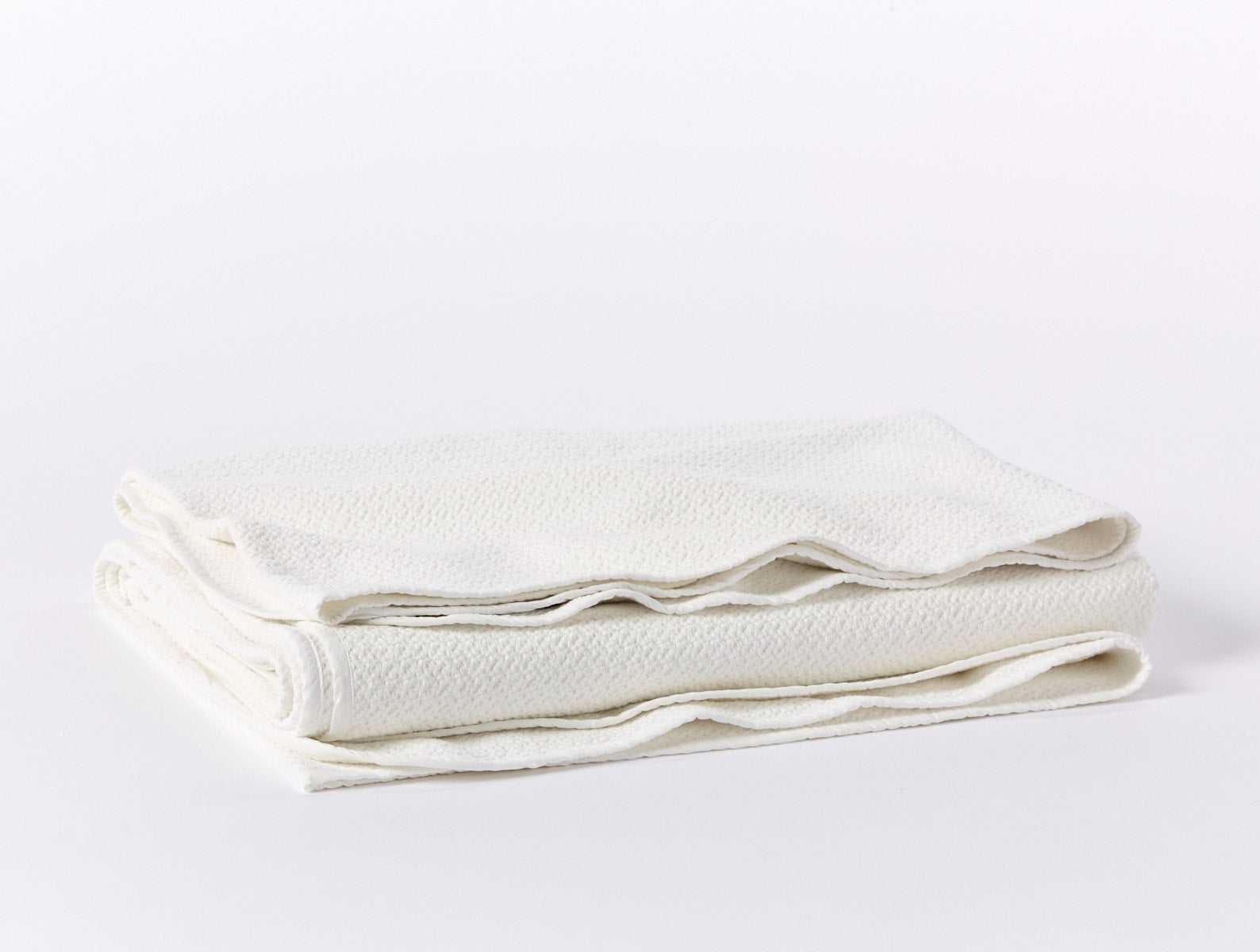
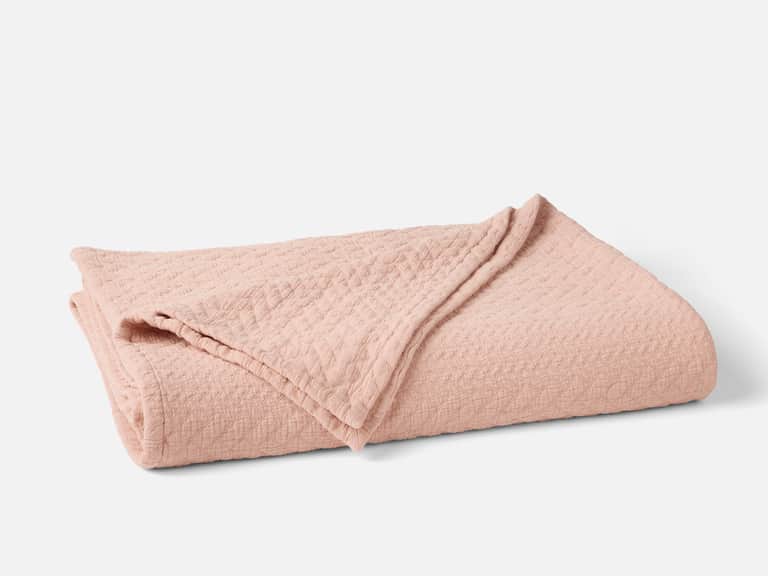
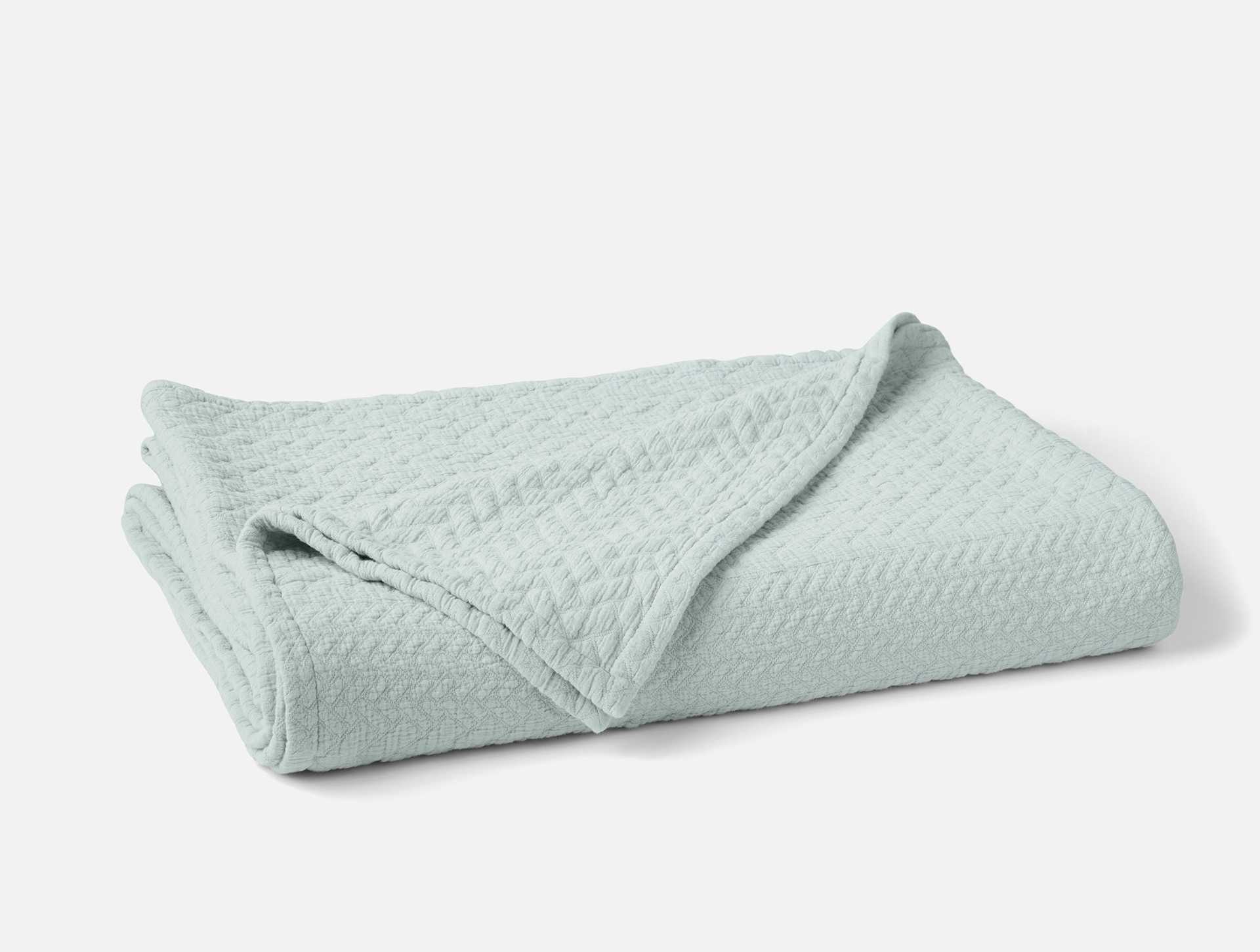
Consider a textured cotton layer such as the Angeles Organic Matelasse Blanket. Its product information describes a GOTS-certified, 100 percent organic cotton textile, with cotton grown in India and woven in Portugal. Those details provide several distinct pieces of information: a fiber claim, a named certification, and an account of where the cotton was grown and the fabric woven. The certification and the stated origins answer different questions. Neither makes the other redundant.
Another example is the Honeycomb Organic Blanket, described as an organic cotton jacquard woven in India, with GOTS certification listed among its credentials. Here, weave, trim, and care instructions describe the object’s construction and everyday use; GOTS speaks to a defined standard for fiber and production. A certification does not tell you that the jacquard will suit your room, but it gives relevant context about the textile’s sourcing and processing claims.
These examples also show why it is worth reading the whole product description rather than stopping at a badge. Fiber content, country-of-origin statements, weave, finishing details, certifications, and care instructions are separate disclosures. Taken together, they make a more useful picture than any one of them can provide alone.
What GOTS cannot tell you on its own
It is not a complete carbon or water footprint. Organic agriculture and controlled processing may matter to environmental performance, but GOTS certification does not automatically supply a product-specific life-cycle assessment. Such an assessment would attempt to quantify impacts across stages such as raw-material production, manufacturing, transport, use, and disposal. Without that analysis, the label cannot tell you the blanket’s total emissions or compare them definitively with another blanket.
It does not guarantee that a product is impact-free. All textile production uses resources. Cotton cultivation requires land and water; spinning, weaving, finishing, and transport require energy and infrastructure. A certification can set conditions and reduce certain risks without making production environmentally neutral. “Certified” is not a synonym for “no impact.”
It does not tell you how long the blanket will last. Durability depends on fiber quality, construction, finishing, use, and care. A sturdy hem and a fabric that can withstand regular washing may support a longer useful life, but those qualities are not established merely by a GOTS mark. Longevity matters environmentally because a textile kept in use for years may avoid replacement, but the buyer still needs information about construction and realistic care.
It is not a promise of a particular hand or performance. “Organic” does not mean softer, cooler, heavier, more absorbent, or less likely to pill. A gauze-like weave and a dense jacquard can behave very differently, even if both use certified organic cotton. If you sleep warm, prefer a substantial layer, or need an easily laundered blanket, construction and care guidance are still central.
It is not the same as a medical or allergy guarantee. GOTS sets textile-production requirements; it does not certify that a product will prevent a skin reaction or suit every person with sensitivities. People can respond to fibers, dyes, finishes, detergents, or other factors in individual ways. A certification may help clarify how a textile is made, but it cannot predict an individual health outcome.
It does not, by itself, certify every claim about a company. A certified product is not proof that every product sold by the same brand is certified, or that every corporate practice meets the same standard. Certification applies within a defined scope. For a specific item, look for a clear product-level claim and, where available, certification details that can be checked against the relevant certification body or standard database.
Reading claims without letting them do too much
Consumer language tends to compress. A small leaf, a green word, and the word “organic” can seem to tell a whole story. But labels have boundaries; marketing often tries to make those boundaries disappear. The useful habit is not cynicism. It is precision: ask what exactly is certified, which part of the product the claim applies to, and what evidence is offered for the rest.
A product described as “made with organic cotton” may contain a smaller share of certified organic fiber than one labeled “organic” under GOTS rules. A brand might also use “organic” in a general description without making clear whether the finished textile itself is GOTS certified. That does not automatically mean the claim is false, but it does mean the shopper should look for the certification name, the scope of the claim, and supporting documentation.
It is also sensible to distinguish certification from origin. “Grown in India” identifies a stated agricultural location; “woven in Portugal” identifies a manufacturing stage. Neither phrase, alone, establishes the labor conditions, chemical management, or environmental controls at a facility. A standard may address some of those matters, while origin details add geographic context. The most informative product pages make both kinds of information visible and do not ask one to stand in for the other.
There is a quieter point here. A label is most useful when it is treated not as a conclusion but as an invitation to inspect. It can narrow uncertainty, sometimes considerably, while leaving room for questions about durability, repair, packaging, shipping, and end-of-life options. No single standard can carry the whole burden of responsible consumption.
Questions worth asking before you buy
For bedding, the most practical questions are often plain ones. Is the finished item certified, or is only the fiber described as organic? What share of the textile is certified organic fiber? Does the seller identify where the cotton was grown and where the fabric was made? Are the care instructions compatible with how you actually do laundry? Does the construction seem suited to frequent use, or is the item likely to become a decorative layer that needs special handling?
- Look for the name of the standard, not only broad terms such as “eco-friendly” or “clean.”
- Check whether the claim applies to the finished textile and whether the product description explains the fiber content.
- Treat origin, certification, and material details as complementary facts, not interchangeable credentials.
- Read construction and care information; breathable cotton and a particular weave may matter more to daily comfort than a general sustainability phrase.
- If a claim is important to your decision, consult current standard guidance or ask the seller for the relevant certification details.
The environmental question that remains
Organic cotton bedding sits at the intersection of intimate comfort and distant production. One sleeps beneath the cloth; the crop, mill, dye house, and sewing floor remain largely out of sight. Certification exists, in part, to make certain parts of that distance accountable. GOTS can tell a reader more than a vague promise can about organic fiber and specified conditions across textile processing. That is a meaningful contribution.
Yet a textile’s overall impact is also shaped by how much of it is made, how far it travels, how long it is used, how it is washed and dried, and what happens when it is no longer wanted. Those questions do not disappear when a product is certified. They become easier to ask with some confidence, because at least one part of the story has a defined framework behind it.
The sensible response to a GOTS label is neither to worship it nor dismiss it. Read it for what it is: a credible, bounded signal about organic fiber and aspects of processing, backed by a standard and a certification system. Then read the rest of the label. A blanket is made of more than its cotton, and a responsible choice is made of more than its badge.